For decades, luxury hospitality photography followed one unspoken rule: everything must be perfect. Pools without swimmers. Beds with zero wrinkles. Restaurants empty of actual diners. And guests, increasingly, stopped believing any of it.
The visual language of luxury has been so thoroughly optimised — every shadow lifted, every imperfection cloned out, every scene staged — that it has started to function as a warning sign rather than an invitation. When a hotel's photography is too perfect, experienced travellers read it as a signal: this place has something to hide.
In 2026, the brands winning the attention economy in luxury hospitality are doing something that would have seemed counterintuitive five years ago. They're publishing messier images. Not sloppy ones — there is still enormous craft involved — but images that feel like they were taken during an actual stay, not a closed-set production.
The quiet luxury shift in visual storytelling
The "quiet luxury" aesthetic that has dominated interior design and fashion has arrived in hospitality photography. What it means in practice is this: restraint over loudness. A single stem in a matte vase rather than a floral arrangement that fills the frame. Folds in the linen. A glass of water with condensation on the outside. The suggestion of a guest's presence rather than its erasure.
These images are harder to make than they look. Controlled imperfection requires more skill than controlled perfection. You need to know exactly which details to leave in and which to remove — and that judgment comes from understanding the emotional response you're trying to trigger, not just the technical execution.
What "authentic" actually means for a luxury brand
Here is the tension that most hospitality marketing directors feel: they know authenticity performs better on social, but they're worried that authentic means cheap. It doesn't. The difference between authentic luxury content and amateur content is not the presence of imperfection — it's the intention behind it.
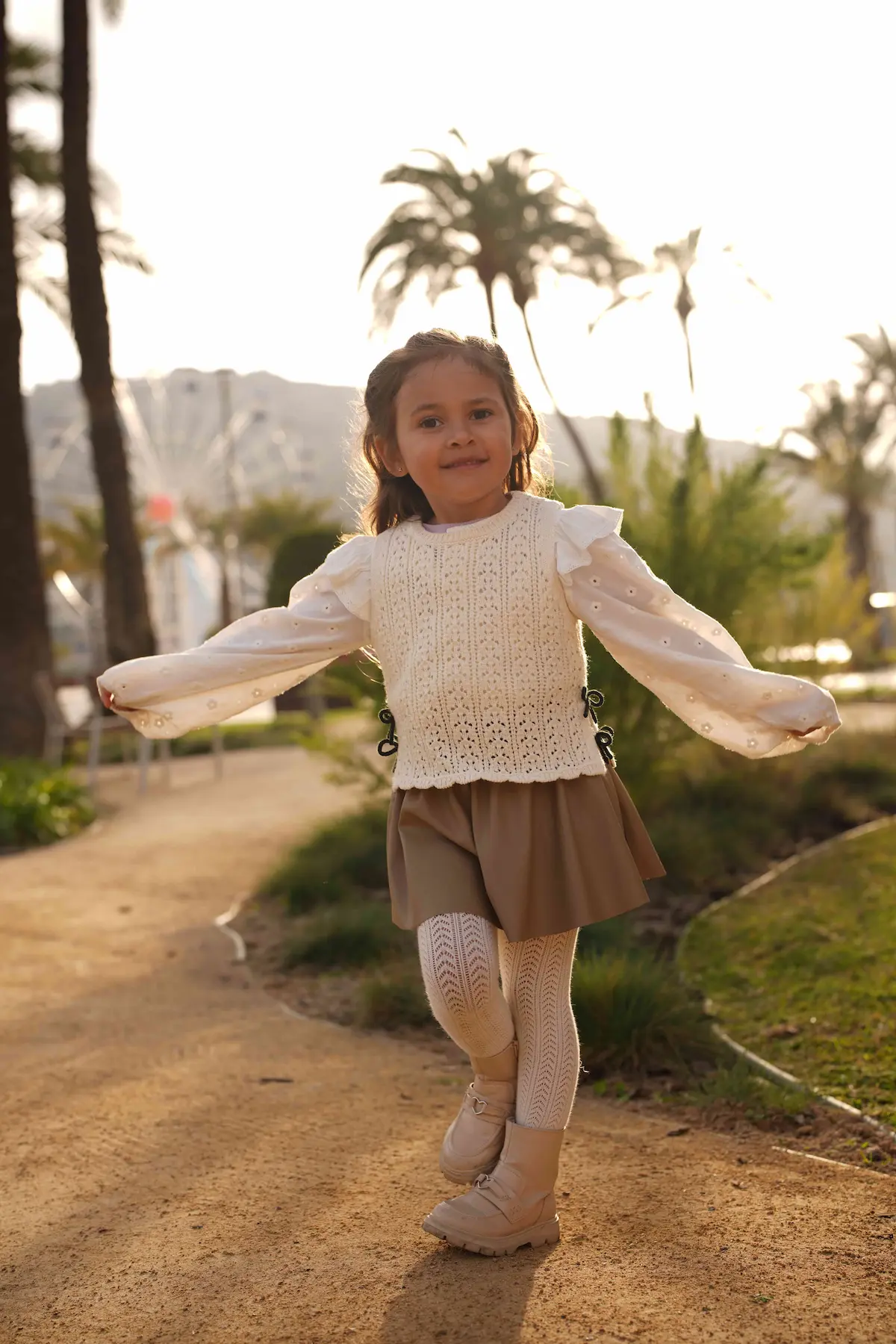
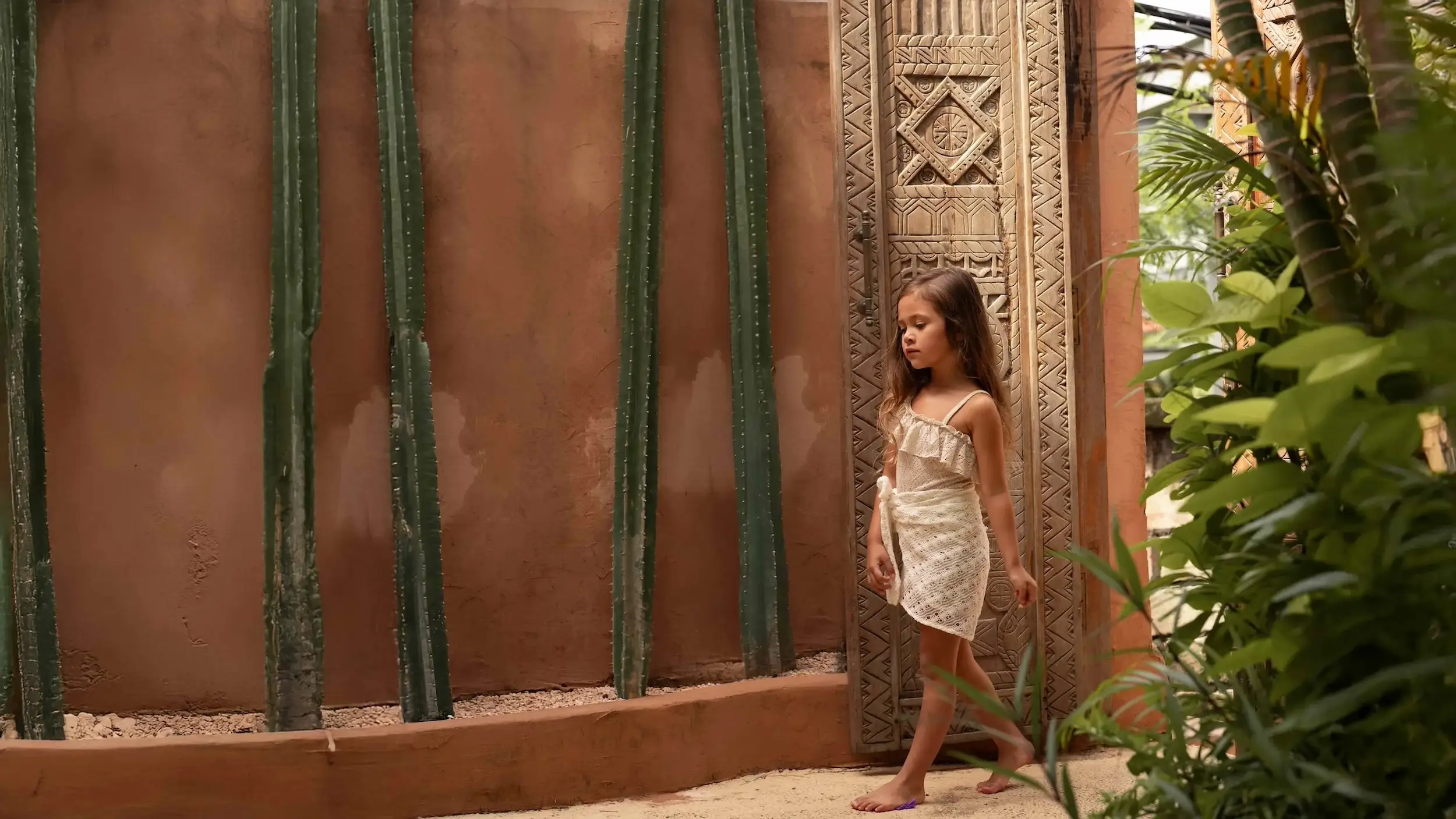
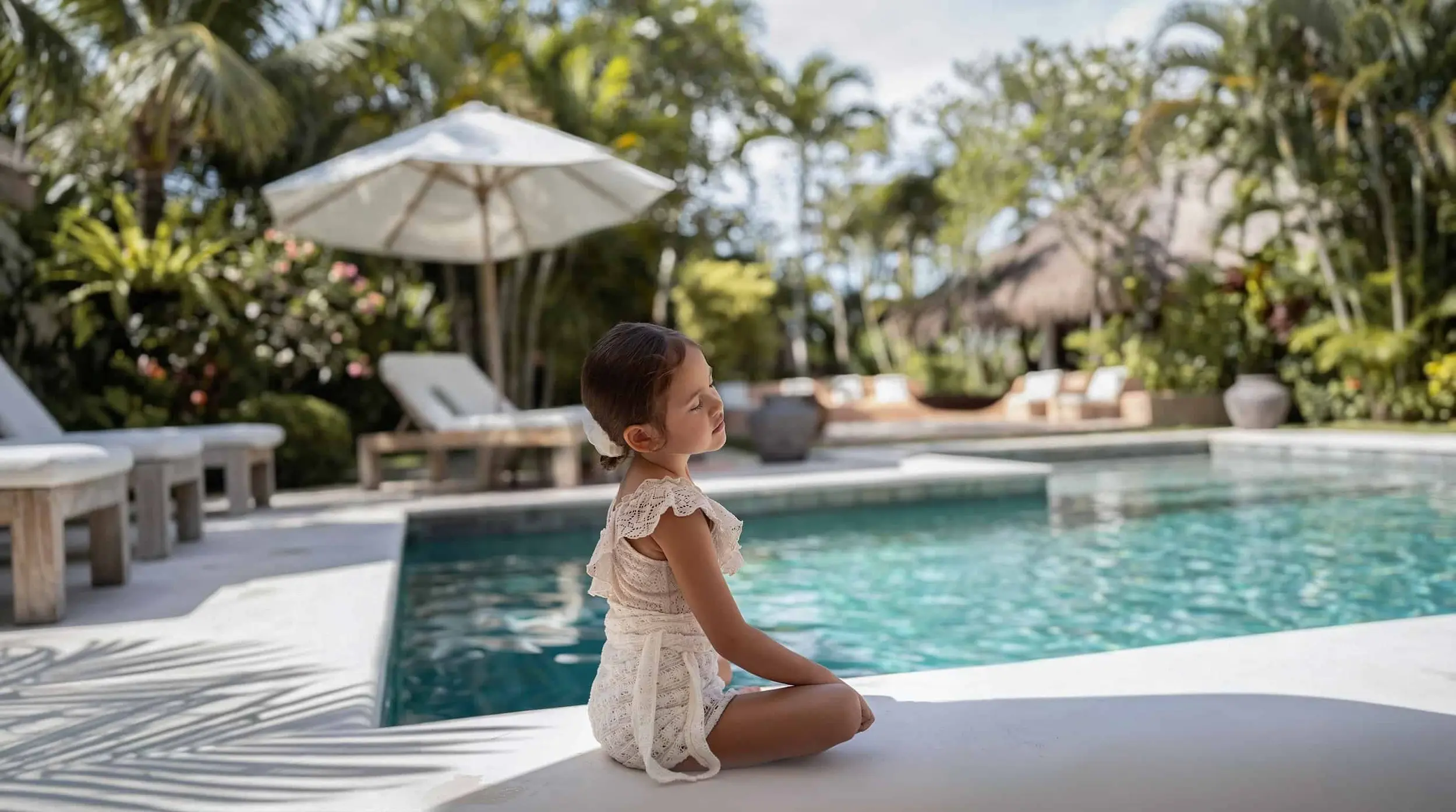
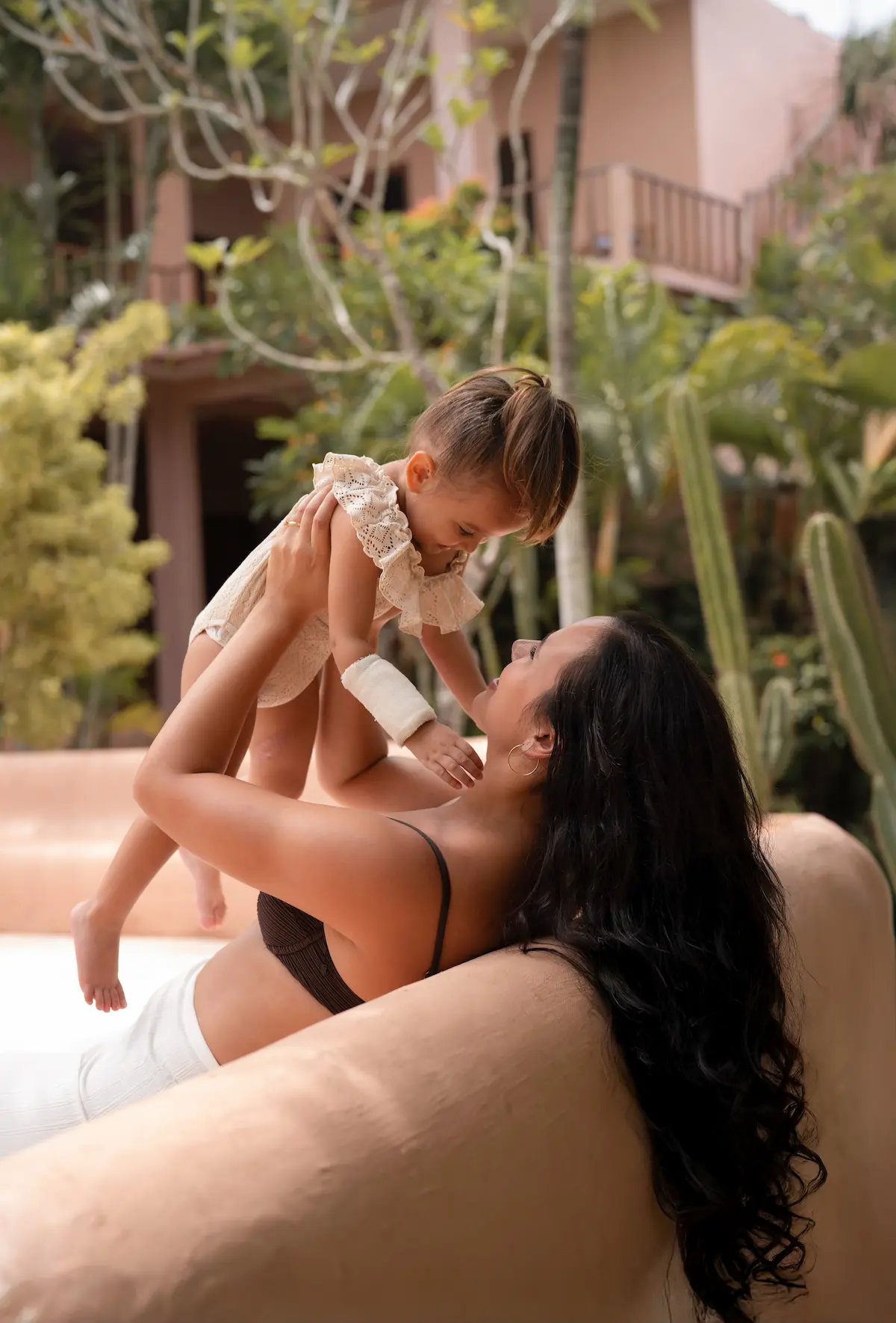
A family splashing in your infinity pool is not a degradation of your brand. It is evidence that your pool delivers on its promise. A child running through your garden proves that your garden is a real space, not a rendering. When we photograph hotels with our own children in frame, we are providing something that a solo commercial photographer working on a cleared set cannot: proof of life.
"The most powerful thing a luxury hotel can show a prospective guest is that real people, with real lives, felt genuinely at ease in their space."
This is not a trend that will pass. The visual sophistication of travel audiences has accelerated faster than most marketing departments have adjusted to. Guests now arrive with reference imagery from TikTok and Instagram — candid, real, motion-blurred — and they are comparing your polished brochure photography against that reference. The brochure loses.
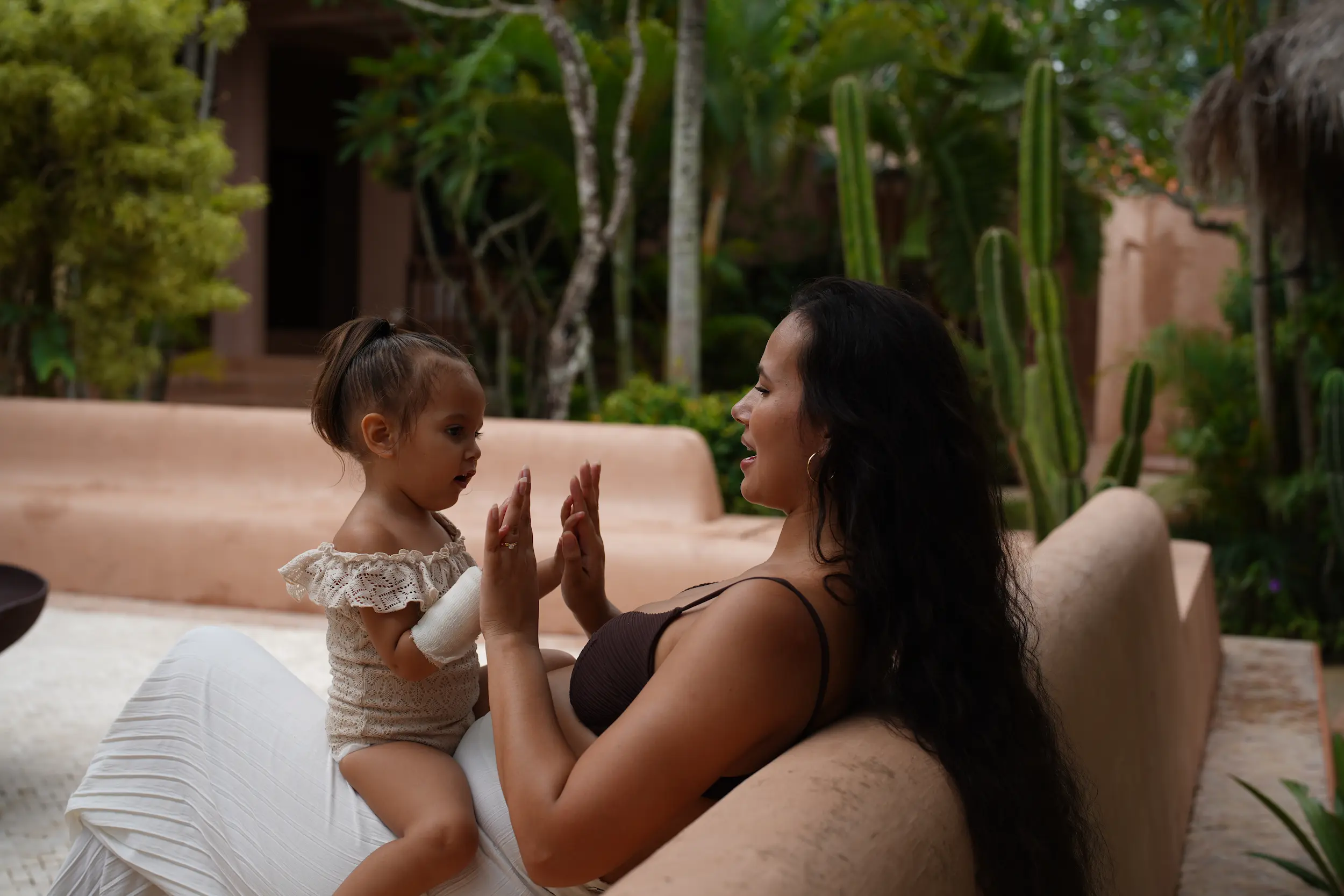
The hotels that are doing this well are not abandoning craft — they are redirecting it. Less time on post-production retouching. More time on understanding the light, the moment, the guest experience they're trying to convey. The photographs are still beautiful. They're just believable as well.
If your property's photography looks like every other property in your category, the problem is not your property — it's the brief you've been giving your production team. The next step is not a new photographer. It's a new conversation about what you actually want guests to feel.